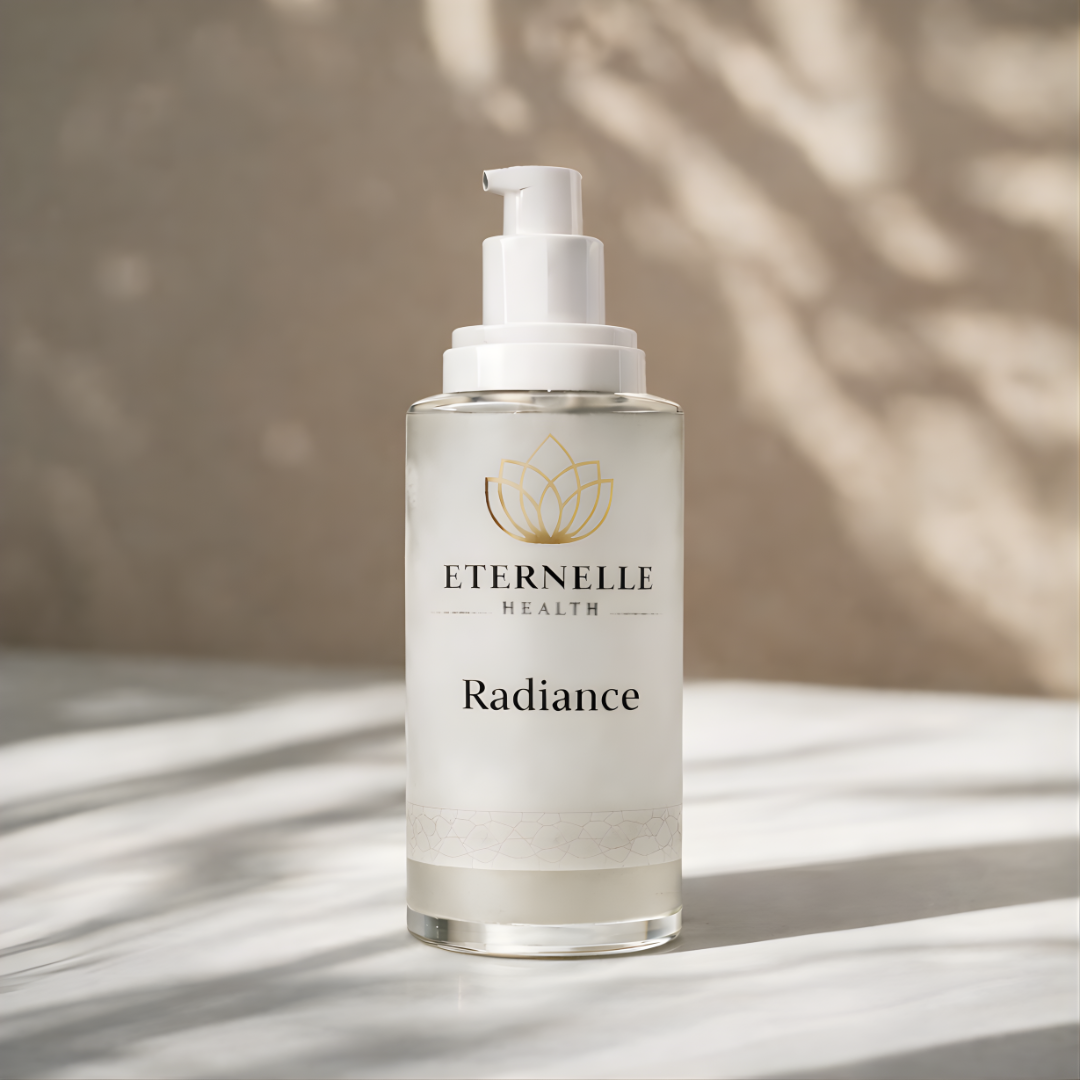
Q: What skin concerns is Radiance best suited for?
A: Radiance is best for hormonal acne, excess facial or body hair (hirsutism), and uneven skin tone often linked to PCOS. It combines Azelaic Acid, Metformin, Progesterone, and Spironolactone to target multiple root causes.
Q: How long does it take to see results with Radiance?
A: With consistent use, Radiance shows visible improvements in about 4 weeks due to Azelaic Acid, while Spironolactone and hormone-balancing effects from Metformin and Progesterone may take 1–3 months for full benefits.
Q: Are there any precautions or side effects when using Radiance?
A: Yes. Since Radiance contains hormone-active compounds, consult our healthcare provider before use, especially if pregnant or breastfeeding. Some users may experience mild irritation, dryness, or sensitivity.
Q: Can Radiance be used with other topical products?
A: Radiance can be combined with other skincare products, but avoid layering it with strong irritants such as harsh exfoliants or retinoids. It works well with moisturizers and sunscreens to minimize sensitivity.
Q: Is Radiance safe for all skin types?
A: Radiance is generally well-tolerated, especially since Azelaic Acid suits most skin types. However, people with very sensitive skin should patch test first and introduce the product gradually.
Q: Do I need to use sunscreen with Radiance?
A: Yes. Ingredients like Azelaic Acid can make skin more sensitive to sunlight. Daily use of sunscreen will help prevent irritation and protect your results.