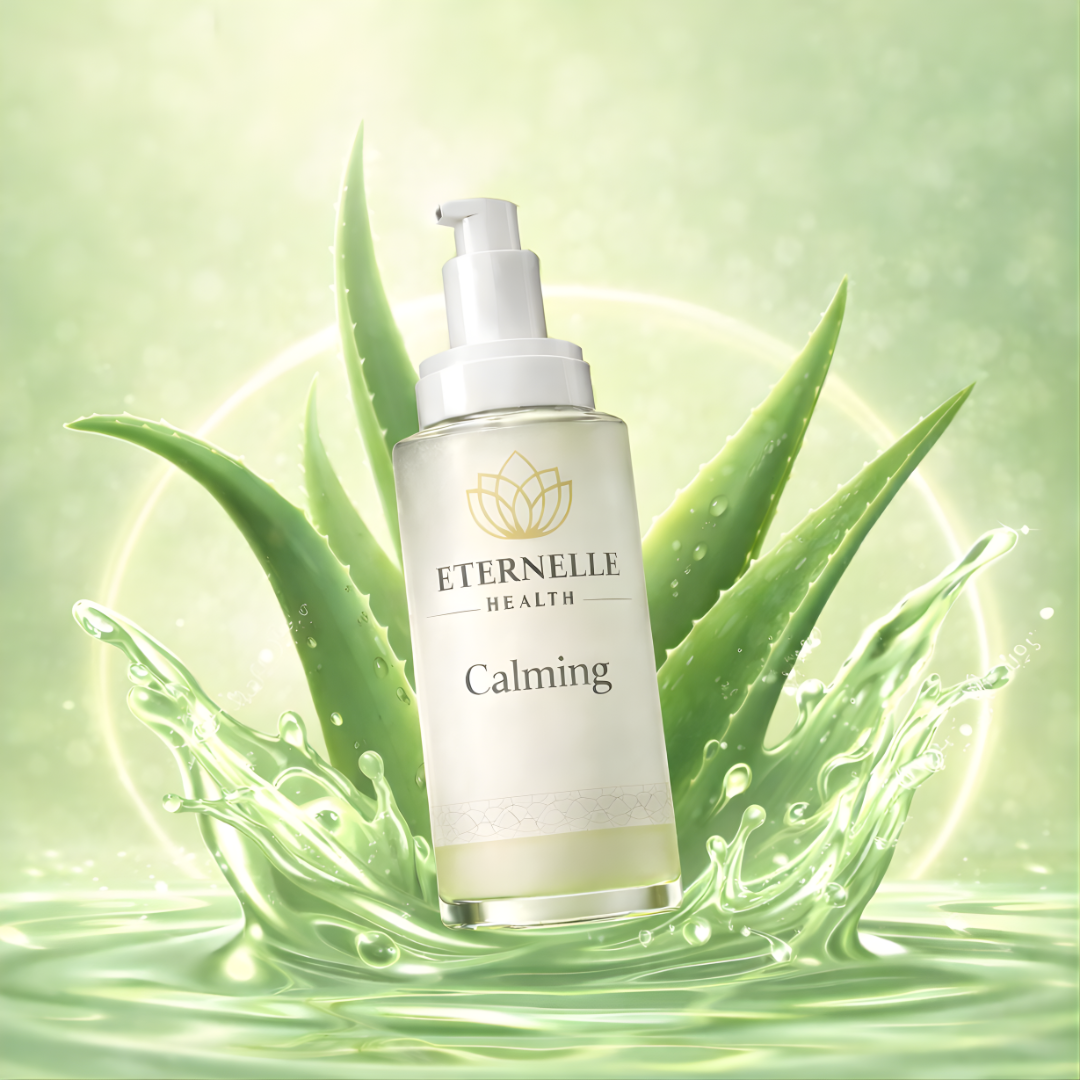
Q: Do I need a prescription for Calming?
A: Yes. Calming contains prescription-strength actives such as ivermectin, metronidazole, and azelaic acid, so it should be used under the guidance of our licensed healthcare provider.
Q: Can I use Calming during the day?
A: Calming can be used either morning or evening, but dermatologists often recommend evening application. If applied during the day, always follow with a broad-spectrum SPF 30 or higher, since rosacea-prone skin is highly sensitive to UV exposure.
Q: Is Calming safe to use with makeup?
A: Yes. Once Calming has fully absorbed into the skin and is followed by a moisturizer and sunscreen, makeup can be applied without reducing the treatment’s effectiveness.
Q: Who should avoid using Calming?
A: Individuals allergic to any of its ingredients, or those with extremely compromised skin barriers (such as open wounds or severe eczema), should avoid use. Pregnant or breastfeeding patients should consult our healthcare provider before starting.
Q: Can Calming help with rosacea flare-up prevention?
A: Yes. Regular daily use helps reduce inflammatory triggers, balance skin, and minimize recurrence of flare-ups, making it an effective long-term management option for rosacea-prone skin.